Lectures
please note change of venue - (click here for the new venue)
All society lectures start at 11.00am. Members should apply to the Membership
Secretary for PRIOR PERMISSION to bring guests as restrictions will apply to the
numbers using the hall. A fee of £7 is charged for each guest and guests must be
booked in by the Monday prior to the lecture.
Apart from this new venue, our programme remains unchanged. Coffee will be
available as usual from 10.15 for an 11.00 lecture.
26 February 2026
Sarah Burles
Les Trois Grandes Dames of Impressionism
The Impressionists were an
innovative and radical group of
artists whose took Paris by storm in
the 1870s. Using new colours and
techniques, they created paintings
of modern life which shocked and
horrified the art establishment.
From the start the group included
women artists but their contribution
to Impressionism has often been
overshadowed by their male
contemporaries. Marie
Bracquemond, Berthe Morisot and Mary Cassatt all exhibited regularly at the
Impressionist exhibitions alongside artists such as Monet, Renoir and Degas.
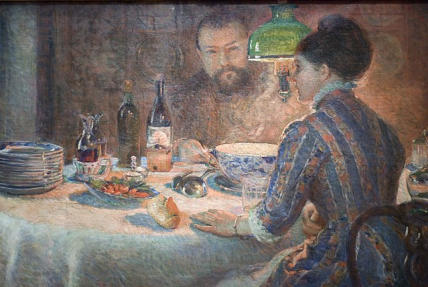
Marie Bracquemond Under the Lamp Public domain
26 March 2026
Mary Alexander
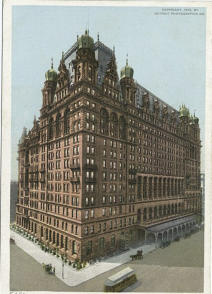
The Waldorf Hotel: The extraordinary story of two iconic hotels built on Astor
Feuds, Fortunes and Art Patronage.
Immortalised in Cole Porter’s lyrics “You’re the top!
You’re a Waldorf salad”, the Waldorf Astoria hotel,
New York was ‘home in New York to the stars’,
international celebrities and world leaders.
Built at the height of the Depression and famous
before it opened, its glittering Jazz Age interiors
were created by leading European designers, artists
and sculptors.
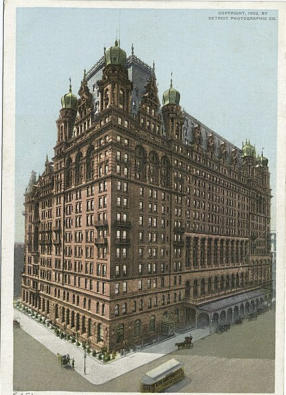
The Waldorf Astoria, New York. After 1898
23 April 2026
Juliet Heslewood
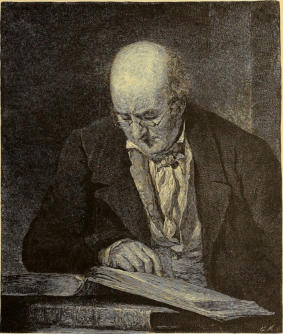
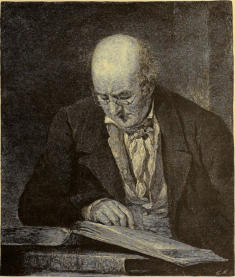
Fathers: artists’ portraits of their own fathers
So many portraits of artists’ fathers show them sitting
still, wearing dark suits and reading a newspaper.
But further research reveals broader aspects of how
artists have viewed their parent – not always with
filial affection.
Daniel Huntington: Portrait of the Artist's Father 1889
28 May 2026
Mary Branson
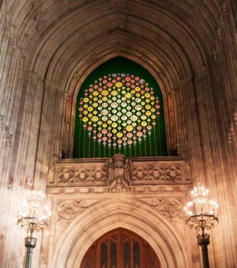
New Dawn: A Monument to Women’s Suffrage, Houses of Parliament
This talk informs people about my artist process and
what was involved in making this public work of art. I
will start the talk with an introduction to my artistic
practise, then go on to describe how I won the national
competition to be artist in residence for Women’s
Suffrage in Parliament.
I go on to talk about the brief and how I came up with
the concept for the monument and how the artwork
was created.
I will end with a video showing the piece being
unveiled for the first time to the public.
New Dawn. Artist Mary Branson 2016 Medium Metal and illuminated glass sculpture
25 June 2026
Alice Foster
The Art of Partying – a feast for the eyes
From Greek Mosaics in the second
century, through weddings in the Bible,
Renaissance allegories of refinement and
excess, sixteenth century peasant parties
out of doors, eighteenth century
harlequins, to the celebratory styles of
twentieth century painters, the depiction of
parties has always been popular in the
history of Western Art.
Alice Foster traces the variety of
merrymaking, banqueting, dances and
music in a feast of colour.
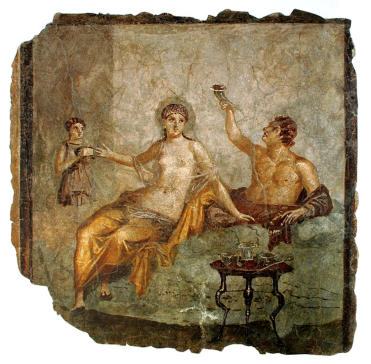
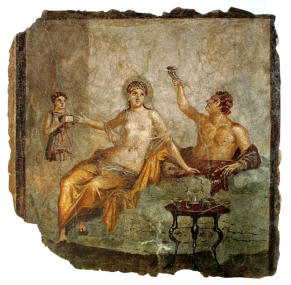
A late Roman-Republican banquet scene in a fresco from Herculaneum, Italy.
Public domain
July 2026 No meeting
27 August 2026
Raymond Warburton
Basquiat and Banksy - Superstars of Street Art
This lecture looks at the art of Banksy and Jean-Michel Basquiat. What binds them
together is ‘street’ or ‘graffiti’ art?
Banksy is British, out of Bristol, and emerged in the 1990s with a stencil-based
approach to street art. His work pops up in the most surprising places. Most
memorable are large rodents, girls with balloons and flower-throwing freedom
fighters. Some see Banksy as a prankster but with increasingly serious cultural or
socio-political points to make. The picture that shredded itself at Sotheby’s in 2018
is a good example. Banksy remains, anonymous despite his popularity.
Born in Brooklyn in 1960, Jean-Michel Basquiat was an American artist who rose to
success during the 1980s as part of the neo-expressionism movement. He died in
1988
24 September 2026
Brain Stater
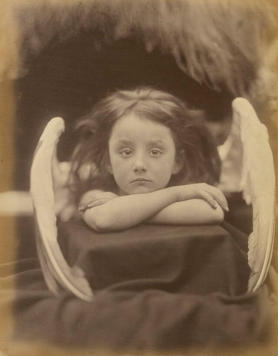
From negative to positive: photography’s long road to recognition as Art
John Ruskin, the leading critic and aesthete, wrote
in the 1850s that photography could never be Art.
This lecture traces the struggle to overturn that view,
beginning with the Pictorialist school of Victorian
photographers and closing with the recent
emergence of photographic art inspired by digital
technology.
Along the way we examine the contested virtues of
colour images and the present revival of old-
fashioned film cameras.
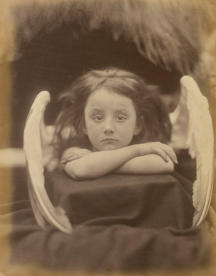
I Wait. Model is Rachel Gurney. Albumen print, 327 x
254mm (12 7/8 x 10"). Photo: Julia Margaret Cameron.
Public domain
22 October 2026
Cindy Polemis
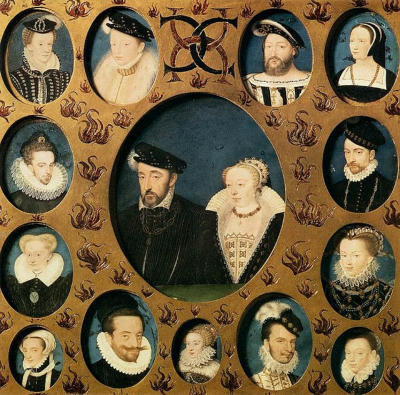
Miniature portraits: Tiny treasures close to our heart
From diplomatic gifts to tokens of love,
between the 16th-19th centuries
miniatures were commissioned as small
portraits which could be held in the
hand or placed inside lockets creating
an intimate relationship between the
owner and sitter. I will look at the history
of these tiny treasures of art.
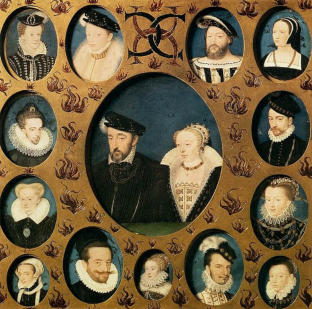
François Clouet - Henri II of Valois and
Caterina de' Medici, Surrounded by
Members of Their Family - Unknown author.
Public domain
The start of the new membership year 2026/27
26 November 2026
Elizabeth Gowing
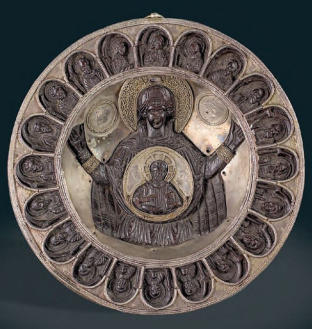
‘The Silver Thread: silver filigree and traditional arts in Kosovo’
From the early Kosovan silver mines which are
mentioned in Dante, through the twentieth
century politics over Kosovo’s mines which
resulted in both a war and a golf course, a silver
thread winds through Kosovo’s history.
Its most intricate tanglings are in the country’s
cultural capital, Prizren, where a seventh
generation of filigree artisans use ‘filum’ and
‘granum’, zigzags, ‘mouse-tooth’ designs and
other twists and turns to magic lacy creations
from dull sticks of raw material.
The results – in boxes, buttons, jewellery,
religious ornamentation and the talismans of
superstition – are a fine narrative of Kosovo’s
history and traditions.
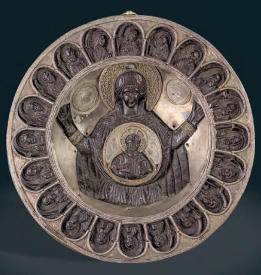
Medieval panagiarion Serbian. Photo: JohnGotten. Creative Commons Attribution-Share Alike
4.0
December 2026 No meeting.

Web site designed, created and maintained by Janet Groome,
Handshake Computer Training.
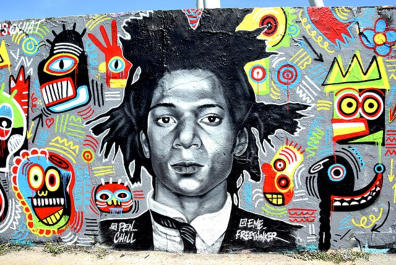
Graffiti: Jean-Michel Basquiat Eme Freethinker
Pen Chill Mauerpark Berlin-Prenzlauer Berg,
Germany. Photo: Singlespeedfahrer. Creative
Commons Zero, Public Domain Dedication
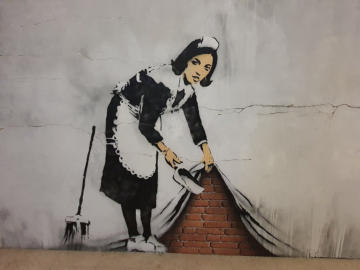
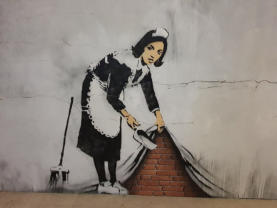
Sweep It Under the Carpet Banksy (2006).
Photo By GualdimG - Own work, CC BY-SA
4.0,






















Lectures
please note change of venue -
(click here for the new venue)
All society lectures start at 11.00am. Members
should apply to the Membership Secretary for
PRIOR PERMISSION to bring guests as restrictions
will apply to the numbers using the hall. A fee of £7
is charged for each guest and guests must be
booked in by the Monday prior to the lecture.
Coffee will be available as usual from 10.15 for an
11.00 lecture.
26 February 2026
Sarah Burles
Les Trois Grandes Dames of Impressionism
The Impressionists were an innovative and radical
group of artists whose took Paris by storm in the
1870s. Using new colours and techniques, they
created paintings of modern life which shocked and
horrified the art establishment.
From the start the group included women artists but
their contribution to Impressionism has often been
overshadowed by their male contemporaries. Marie
Bracquemond, Berthe Morisot and Mary Cassatt all
exhibited regularly at the Impressionist exhibitions
alongside artists such as Monet, Renoir and Degas.
Marie Bracquemond Under the Lamp Public domain
26 March 2026
Mary Alexander
The Waldorf Hotel: The extraordinary story of
two iconic hotels built on Astor Feuds, Fortunes
and Art Patronage.
Immortalised in Cole Porter’s
lyrics “You’re the top! You’re
a Waldorf salad”, the Waldorf
Astoria hotel, New York was
‘home in New York to the
stars’, international
celebrities and world leaders.
Built at the height of the
Depression and famous
before it opened, its glittering
Jazz Age interiors were
created by leading European
designers, artists and sculptors.
The Waldorf Astoria, New York. After 1898
23 April 2026
Juliet Heslewood
Fathers: artists’ portraits of their own fathers
So many portraits of
artists’ fathers show them
sitting still, wearing dark
suits and reading a
newspaper.
But further research
reveals broader aspects of
how artists have viewed
their parent – not always
with filial affection.
Daniel Huntington: Portrait of the Artist's Father 1889
28 May 2026
Mary Branson
New Dawn: A Monument to Women’s Suffrage,
Houses of Parliament
This talk informs
people about my artist
process and what was
involved in making this
public work of art. I will
start the talk with an
introduction to my
artistic practise, then
go on to describe how I
won the national
competition to be artist
in residence for
Women’s Suffrage in
Parliament.
I go on to talk about the brief and how I came up
with the concept for the monument and how the
artwork was created.
I will end with a video showing the piece being
unveiled for the first time to the public.
New Dawn. Artist Mary Branson 2016 Medium Metal and
illuminated glass sculpture
25 June 2026
Alice Foster
The Art of Partying – a feast for the eyes
From Greek
Mosaics in the
second century,
through weddings in
the Bible,
Renaissance
allegories of
refinement and
excess, sixteenth
century peasant
parties out of doors,
eighteenth century
harlequins, to the
celebratory styles of twentieth century painters, the
depiction of parties has always been popular in the
history of Western Art.
Alice Foster traces the variety of merrymaking,
banqueting, dances and music in a feast of colour.
A late Roman-Republican banquet scene in a fresco from
Herculaneum, Italy.
Public domain
July 2026 No meeting
27 August 2026
Raymond Warburton
Basquiat and Banksy - Superstars of Street Art
This lecture looks at the art of Banksy and Jean-
Michel Basquiat. What binds them together is ‘street’
or ‘graffiti’ art?
Banksy is British, out of Bristol, and emerged in the
1990s with a stencil-based approach to street art.
His work pops up in the most surprising places. Most
memorable are large rodents, girls with balloons and
flower-throwing freedom fighters. Some see Banksy
as a prankster but with increasingly serious cultural
or socio-political points to make. The picture that
shredded itself at Sotheby’s in 2018 is a good
example. Banksy remains, anonymous despite his
popularity.
Born in Brooklyn in 1960, Jean-Michel Basquiat was
an American artist who rose to success during the
1980s as part of the neo-expressionism movement.
He died in 1988.
24 September 2026
Brain Stater
From negative to positive: photography’s long
road to recognition as Art
John Ruskin, the leading
critic and aesthete, wrote in
the 1850s that photography
could never be Art.
This lecture traces the
struggle to overturn that
view, beginning with the
Pictorialist school of
Victorian photographers
and closing with the recent
emergence of photographic
art inspired by digital
technology.
Along the way we examine the contested virtues of
colour images and the present revival of old-
fashioned film cameras.
I Wait. Model is Rachel Gurney. Albumen print, 327 x
254mm (12 7/8 x 10"). Photo: Julia Margaret Cameron.
Public domain
22 October 2026
Cindy Polemis
Miniature portraits: Tiny treasures close to our
heart
From diplomatic gifts to tokens of love, between the
16th-19th centuries miniatures were commissioned
as small portraits which could be held in the hand or
placed inside lockets creating an intimate
relationship between the owner and sitter. I will look
at the history of these tiny treasures of art.
François Clouet -
Henri II of Valois
and Caterina de'
Medici,
Surrounded by
Members of Their
Family - Unknown
author. Public
domain
The start of the new membership year 2026/27
26 November 2026
Elizabeth Gowing
‘The Silver Thread: silver filigree and traditional
arts in Kosovo’
From the early Kosovan silver mines which are
mentioned in Dante, through the twentieth century
politics over Kosovo’s mines which resulted in both a
war and a golf course, a silver thread winds through
Kosovo’s history.
Its most intricate
tanglings are in the
country’s cultural
capital, Prizren, where
a seventh generation
of filigree artisans use
‘filum’ and ‘granum’,
zigzags, ‘mouse-
tooth’ designs and
other twists and turns
to magic lacy
creations from dull
sticks of raw material.
The results – in boxes, buttons, jewellery, religious
ornamentation and the talismans of superstition –
are a fine narrative of Kosovo’s history and
traditions.
Medieval panagiarion Serbian. Photo: JohnGotten.
Creative Commons Attribution-Share Alike 4.0
December 2026 No meeting.
Web site designed, created and maintained by Janet Groome,
Handshake Computer Training.
Sweep It Under the Carpet Banksy (2006).
Photo By GualdimG - Own work, CC BY-SA
4.0,
Graffiti: Jean-Michel Basquiat Eme Freethinker
Pen Chill Mauerpark Berlin-Prenzlauer Berg,
Germany. Photo: Singlespeedfahrer. Creative
Commons Zero, Public Domain Dedication